
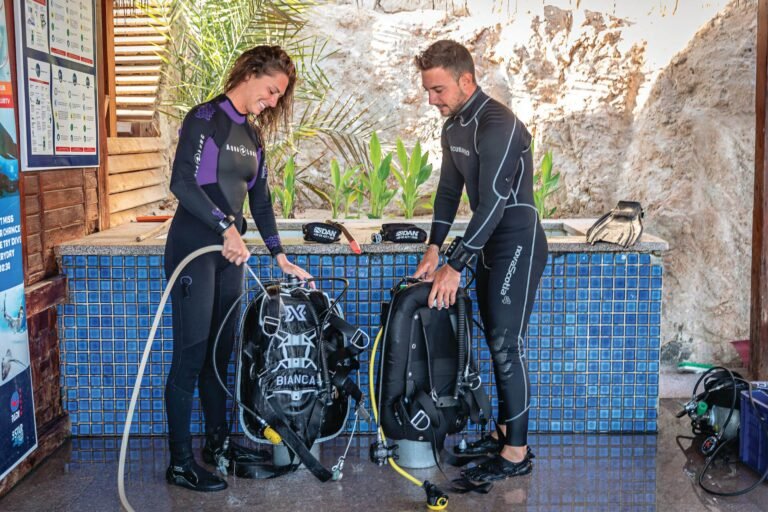
Most people don’t think about it, but your scuba equipment is classified as “life support equipment”. Diving is an amazing and safe sport and taking care of your equipment helps ensure every dive goes smoothly.
There are a LOT of resources on how to clean your scuba gear. Most of it is generally good advice and, like most things, the more effort you put into it, the more you’ll get out of it. However, we know the reality of most divers are exhausted after a long day of diving and may neglect cleaning their gear thoroughly.
Below is a guide we assembled from being divers ourselves, asking our instructors and seeing what “really” needs to be cleaned out and what can wait a few times. If you have any questions on how to take care of your gear, reach out to us and we are happy to walk you though the steps!
After use (whether in salt water or fresh water), you should thoroughly rinse all of your gear using fresh, clean water. This will remove any salt & mineral deposits as well as any sediment that may have gotten trapped in your equipment after you dive. When that is complete, dry your gear in a shaded area out of direct sunlight, preferably hanging it to let it drip dry. After it’s dry, return it back to its storage area. You should avoid stowing wet gear as it promotes mold & mildew growth.
Fresh Water Diving – It’s important to note that even when diving fresh water, rinsing your gear is recommended to remove any dirt, debris or any hitchhiking critters (don’t ask, we’ve seen some things).
Salt Water Diving – Salt water diving requires a more through rinse. When salt water dries, it leaves a coating of salt & minerals on your gear which CAN impede it’s proper operation. As such, we recommend taking a little extra time rinsing things like the regulators, BCD valves & inflators, wetsuit zippers, computers along with all your accessories (reels, lights, SMB’s, etc).
Below is the “thorough” guide for taking care of your gear. We recommended doing this type of deep cleaning once a month when diving a lot, or before you plan on NOT diving for more than a month at time. While this type of cleaning does take a little time, it helps ensure your equipment is operational and saves you on repair bills.
Every time you clean your gear, it’s a great opportunity to inspect it for damage, wear & tear, rips, tears, or just a reminder to put that double ender back on your BCD. Your mask & fin straps, regulator mouthpieces, and octo holders are area we generally see the most wear.